What happens when you run an air fryer full of soapy water
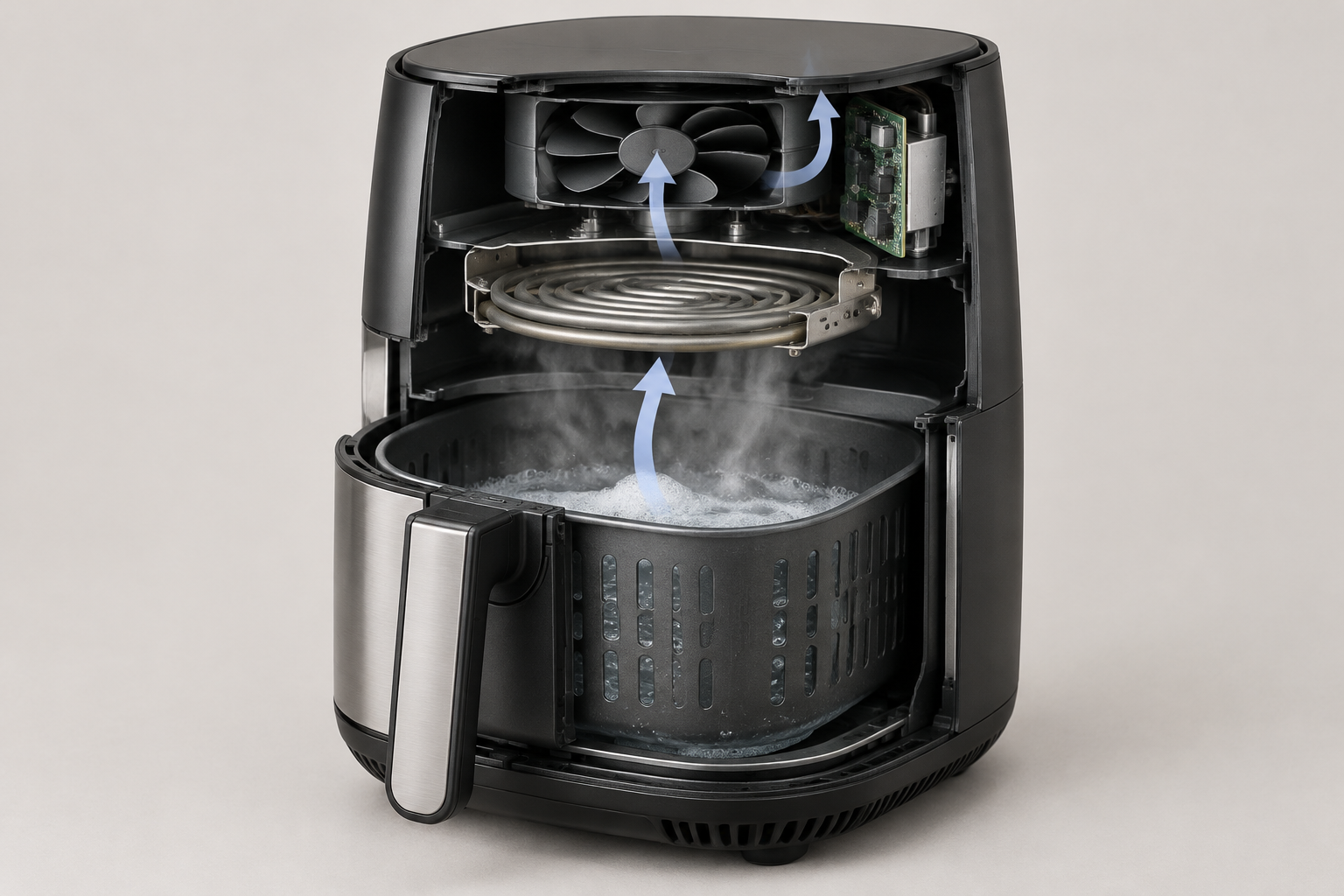
You've probably seen the clip. Someone fills the basket partway with water and a squirt of dish soap, or drops in a dishwasher pod. They run the air fryer at 350 to 400°F for 3 to 10 minutes, then pour out a basin of brown water. Running an air fryer with cleaning liquid inside goes against manufacturer guidance, and the dramatic result is mostly for show.
The problem is the layout of the machine. An air fryer cooks with a high-speed fan mounted directly above an exposed heating element. When soapy water boils in the basket, that fan pulls suds and fine droplets up toward the live element, the fan motor, and the internal wiring. The appliance is built to vent hot, dry air. It isn't designed to hold steam, and condensation can work its way through housing seams to the electronics.
The manufacturers' instructions all point the same way. SharkNinja tells owners to unplug the unit before cleaning, never immerse the main housing in liquid, and soak stuck-on food in the sink, away from the base. Breville says to clean the heating element only when it is completely cold, with a dry or slightly damp soft brush, and never by running a heating cycle with a cleaning solution. Cosori warns against operating its air fryers with more liquid than a normal recipe calls for, and against abrasive tools on coated parts.
As for the brown water, it doesn't prove much. When Mashable ran water and dish soap in an air fryer drawer at 370°F for about three minutes, the hack did no better than a regular sink soak. The murky water was loose grease that warm tap water would have released anyway.
The sink soak, and a paste for the stubborn film
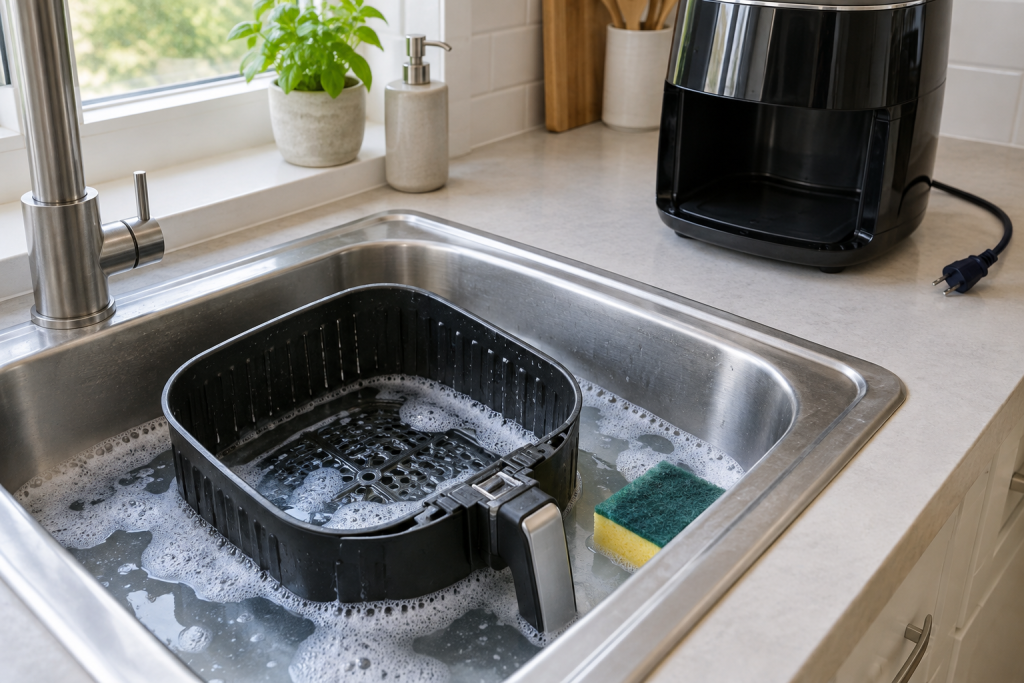
Start with a plain sink soak. It gives you the same hands-off soaking and loosened grease as the viral version, with no electricity anywhere near the water.
1. Unplug the air fryer and let the basket and tray cool enough to handle.
2. Pull the basket and any crisper plate or tray out of the base. The base itself never goes in water.
3. Fill the sink with hot tap water and a regular degreasing dish soap.
4. Let the parts soak for 15 to 30 minutes.
5. Wipe them clean with a non-scratch sponge or a silicone scrubber, rinse, and dry before putting them back.
That routine handles most everyday grease and crumbs. Leave steel wool and metal scrapers in the drawer.
### Why some brown film won't wash off
Some baskets keep a tacky, amber-brown layer no matter how long they soak. That film is oil that was heated past its smoke point and has oxidized and cross-linked into a hard polymer, the same process that seasons a cast-iron pan. Dish soap lifts ordinary grease, but it can't break those bonds, which is why people end up reaching for harsher fixes.
For this film, mix baking soda with a few drops of water into a thick paste. Spread it over the sticky spots, let it sit briefly, and work it with a soft microfiber cloth or non-scratch sponge. The paste is mildly alkaline and relatively gentle on the coating, and it loosens polymerized oil. Rinse it off completely.
The fizzing baking soda and vinegar mix from so many cleaning videos works worse than the plain paste. Vinegar's acid and baking soda's base neutralize each other into water, carbon dioxide, and sodium acetate. All that fizz cancels the alkalinity that does the cleaning.
Keep oven cleaner and heavy sprays out of the basket
When soap and baking soda can't move the brown film, oven cleaner looks like the next step. Skip it on every part of an air fryer. Easy-Off's label says not to spray it on heating elements or electrical connections, and not onto aluminum or painted surfaces because damage may occur. Most air fryer baskets are non-stick coatings over aluminum, and lye-based oven cleaners corrode aluminum and strip the coating. The result is a peeling, pitted surface.
Dishwasher pods are a poor choice for soaking. They are concentrated detergents made for a dishwasher's stainless steel interior, and a pod dissolved against a non-stick basket, or boiled in it as the viral version suggests, wears on the coating and can leave detergent residue behind.
Dawn Powerwash is a different case. Dawn publishes its own guide to cleaning air fryers with Powerwash, so the spray is fine for short contact: spray it on, wipe, and rinse well. Just don't leave it sitting on the coating as a long soak.
The heating element, and less mess next time
Grease and crumbs also collect on the element above the basket, and that area gets a dry clean only. Unplug the unit and wait until it is fully cold. Tip it carefully, then brush away crumbs and dried splatter with a soft brush that is dry or barely damp. Never spray water or cleaner up into the housing, and keep the main body out of the sink.
Aerosol cooking sprays contain propellants and emulsifiers that burn at low temperatures and bake onto non-stick surfaces. A refillable oil mister filled with a high-smoke-point oil, such as avocado or refined light olive oil, cuts down on that film. For greasy foods, a perforated parchment or silicone liner catches drips before they reach the basket.
Frequently Asked Questions
Can I just put the air fryer basket in the dishwasher?
Often, yes. Many manufacturers, including Ninja and Cosori, label their baskets and plates dishwasher safe. Repeated rounds of harsh dishwasher detergent and high drying heat can dull a non-stick coating over time and wear down rubber bumpers, though. Hand washing in the sink is better for the coating's lifespan, and the dishwasher is fine for an occasional shortcut.