What a real tune-up includes
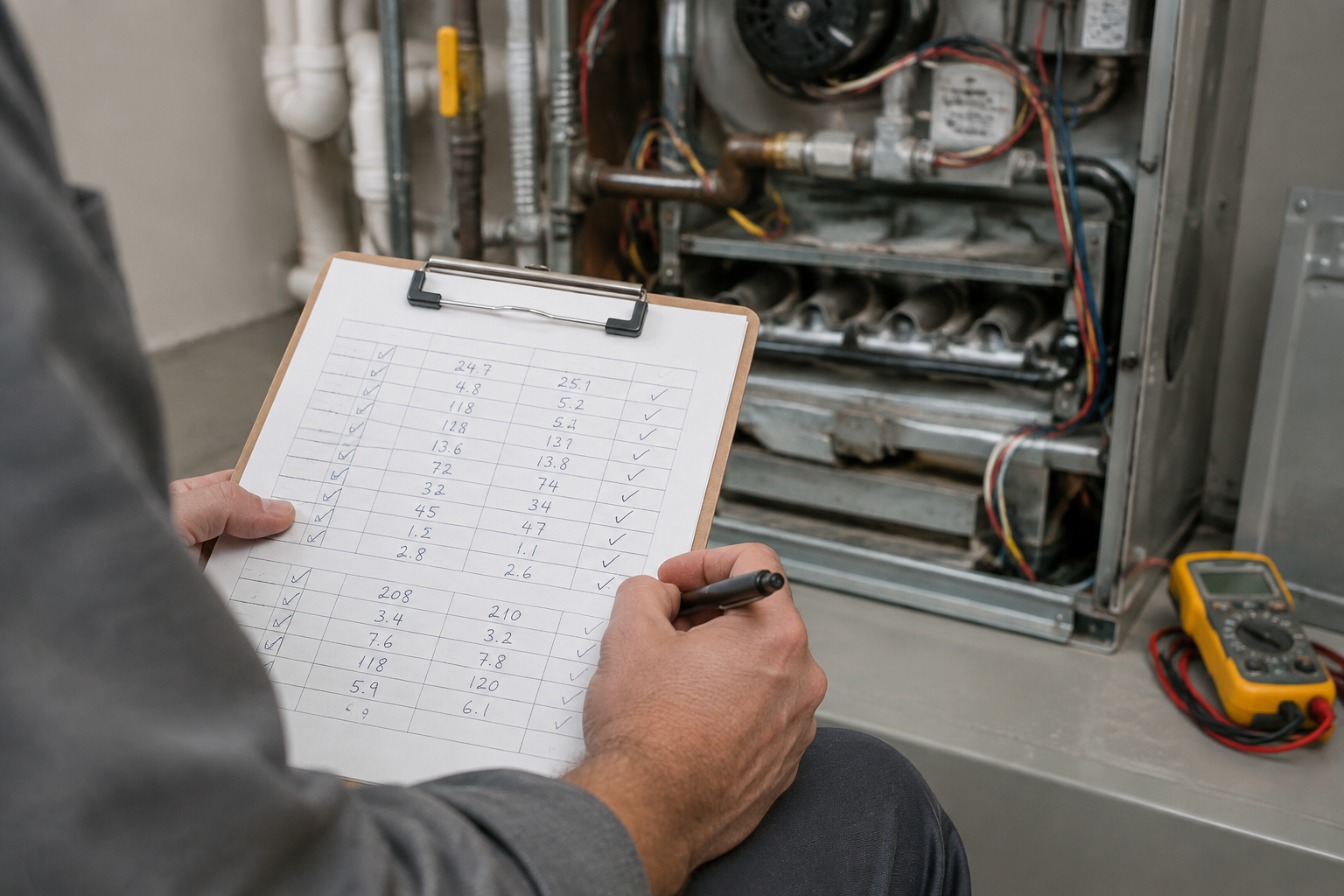
A good tune-up comes down to numbers. A quick clean-and-look visit ends with a verbal "looks fine." A diagnostic visit ends with readings you can keep. The baseline is ANSI/ACCA Standard 4, which calls for measuring rather than eyeballing: temperature rise across the heat exchanger, external static pressure, blower and inducer motor amp draw against the nameplate, run capacitor values in microfarads, electrical terminals, and manifold gas pressure.
Temperature rise is the gap between supply and return air temperature. It should land inside the range printed on the furnace's data plate, so the technician has to compare against your unit and not a universal figure. A high reading points to restricted airflow, such as a clogged filter or undersized ducts, and can trip the high-limit switch.
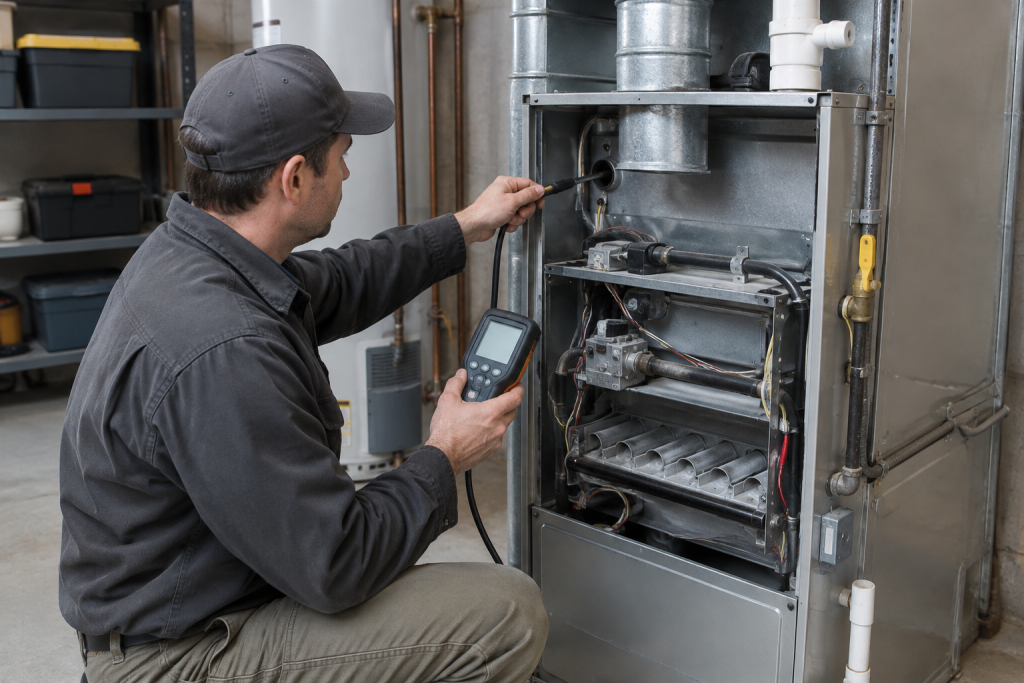
On gas furnaces, combustion analysis is the check that separates thorough techs from rushed ones. An electronic analyzer in the flue reports carbon monoxide and oxygen. Steady-state flue CO is typically under 100 ppm undiluted, CO in the living space should read 0 ppm, and fan-assisted furnaces usually run about 3% to 6% oxygen.
The flame sensor gets a reading in microamps too. Control boards generally need roughly 0.5 to 1.0 microamps to confirm flame, and healthy readings often fall between 1.5 and 6.0.
Insist on the written results, including flue CO and temperature rise, before the tech leaves. If those were never tested, you bought a filter change, not a tune-up. Schedule it in the fall; ENERGY STAR says proper maintenance and airflow calibration can guard against energy losses of up to 15% and unexpected mid-winter breakdowns.
What you can do yourself, and where DIY stops
Change the filter on schedule. It is the cheapest task on the list, and a clogged filter feeds directly into the high temperature rise problem above. Keep the area around the furnace clear and make sure external drain lines are free of obstructions.
A dirty flame sensor is the other reasonable home job, if you are comfortable with the power off. Oxidation on the rod insulates it, and the classic symptom is burners that light and shut off within a few seconds. Clean it gently with a non-abrasive pad. Skip sandpaper, which can leave residue that fouls the rod again quickly.
Static pressure, manifold gas pressure, capacitor testing and combustion analysis need a manometer, a multimeter or capacitance meter, and a calibrated analyzer, plus training around gas and line voltage. Cleaning a filter and a sensor is housekeeping, not a tune-up. A skipped capacitor check is how a weak part can turn into a burned-out blower motor on a cold night.
Extra attention for condensing furnaces
A furnace rated 90%+ AFUE that vents through PVC pulls so much heat from the exhaust that it produces roughly 3 to 6 gallons of acidic condensate per day in steady operation. The tune-up should include flushing the condensate trap, checking the drain line for sediment or algae, confirming the vent slopes back toward the furnace at 1/4 inch per foot, and clearing the pressure switch ports.
A clogged trap can open the pressure switch and lock the furnace out with a pressure-switch error code. Check the trap before paying for a replacement switch. In snowy climates, also make sure the outside exhaust and intake terminations aren't buried or iced over.
What a tune-up costs
A standalone furnace tune-up typically runs $75 to $200, with $100 to $150 the common middle. Annual maintenance plans that cover a spring AC visit and a fall furnace visit generally cost $150 to $300 per year, which often works out better than booking each visit separately.
Be wary of the $29 to $59 special. At those prices the visit is mostly a lead generator, a way to get a salesperson into your basement to find repairs or recommend a replacement. Ask what the visit includes: will they measure temperature rise, test the capacitor, and run a combustion analysis, and will you get the readings in writing? A vague "full inspection" usually means the filter-and-glance version.
Warranties add a reason to pay for the real thing. Lennox and Trane cover defective parts but not maintenance or diagnostic labor, and their terms can exclude failures caused by lack of maintenance. Keep your service records: on a high-value claim such as a heat exchanger, proof of annual professional service can decide whether it is approved.
When the technician says the heat exchanger is cracked
This is the most expensive upsell, and it often arrives with urgency. A common line is that any crack instantly floods your home with carbon monoxide. That overstates it. Induced-draft furnaces run the heat exchanger under negative pressure, so blower air tends to be pushed into the combustion side rather than flue gas into your ducts. Still, AHRI guidance treats a verified crack as grounds for replacement, so the real question is whether the crack is verified.
Ask to see it live on a borescope screen, not a stock photo. Ask for the combustion analysis printout, since a crack often shows up as a jump in oxygen when the blower starts. Then get a second opinion from an independent company before signing anything. Whether a tech can shut off your gas and red-tag the unit varies by state, but you can still seek another opinion.
Some homeowners describe a $59 visit followed by an $8,000 to $12,000 quote, which a second technician disputed after finding factory folds in the metal rather than a crack.