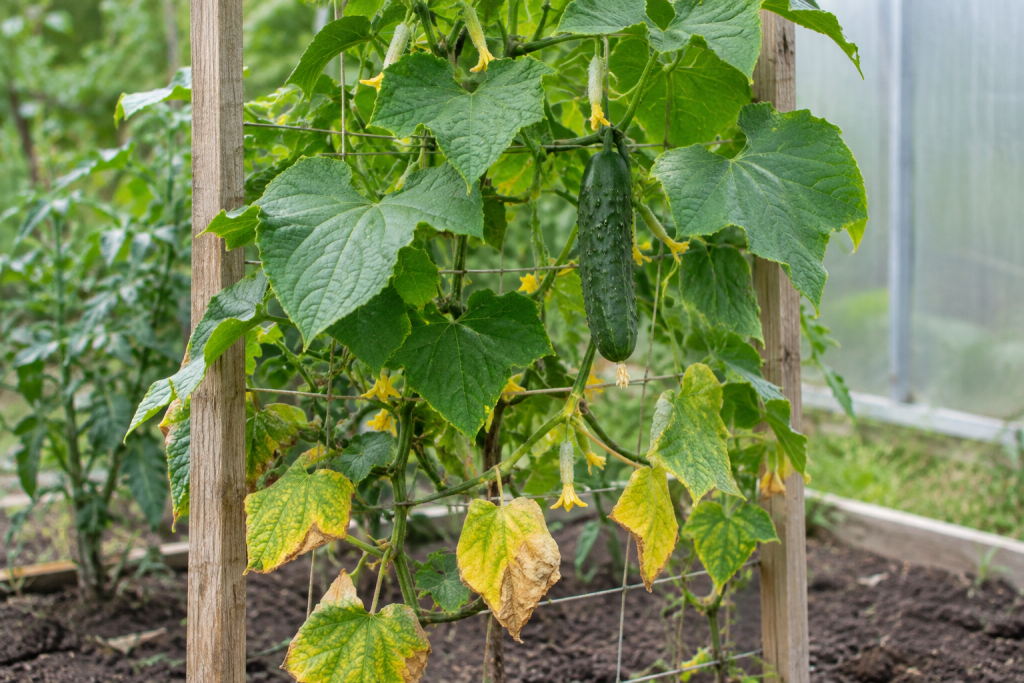
Start with what the plant is telling you
Yellow leaves, a flopping vine and no new cucumbers can come from several different problems. Some take a minute to fix and some mean pulling the plant. Three clues sort them out: where the yellowing starts, how the wilting behaves over a day, and what the fruit and flowers look like.
Why the plant stopped making cucumbers
Look for a missed cucumber first. A fat, yellow fruit hiding under the leaves is usually the culprit when a healthy-looking vine suddenly stops setting new fruit, because a plant carrying mature fruit has less reason to make more. Lift the foliage along the whole vine, pick the yellow fruit, and from then on pick every day or two. Do this before you blame disease or reach for fertilizer.
Pollination is the next suspect. A standard cucumber flower needs repeated bee visits, roughly 8 to 12 per female flower, according to Nebraska Extension. Washington State University's HortSense says poor pollination shows up as small fruit that yellow, shrivel and drop, or as misshapen fruit. Bees can't get in under netting, row cover or a greenhouse roof. In the morning, dab pollen from a male flower onto a female flower (the one with a tiny cucumber behind it), or switch to parthenocarpic varieties, which set fruit without pollination.
Heat can stall a vine too. Harvest to Table says daytime temperatures above about 90°F and nights above 70 to 75°F damage pollen and make flowers drop. The plant isn't sick. Shade cloth, steady moisture and mulch help, and production usually returns when the weather cools.
Young vines also open male flowers first and add female flowers later. A plant with plenty of blooms and no fruit in early summer may only need a couple of weeks.
Wilting: heat, water, or a disease with no cure
How the wilt behaves tells you more than how bad it looks. A vine that droops on a hot afternoon and perks up by evening, or within a couple of hours of a deep watering, is losing water faster than the roots can supply it. Water deeply, mulch, and don't panic.
Wilting in soggy soil is a different problem. Waterlogged roots run out of oxygen and can't deliver water, so the plant wilts while the ground is visibly wet. South Dakota State Extension describes this in cool, wet soil. More water makes it worse, so let the soil drain and dry down. Fertilizer can't fix roots that aren't working.
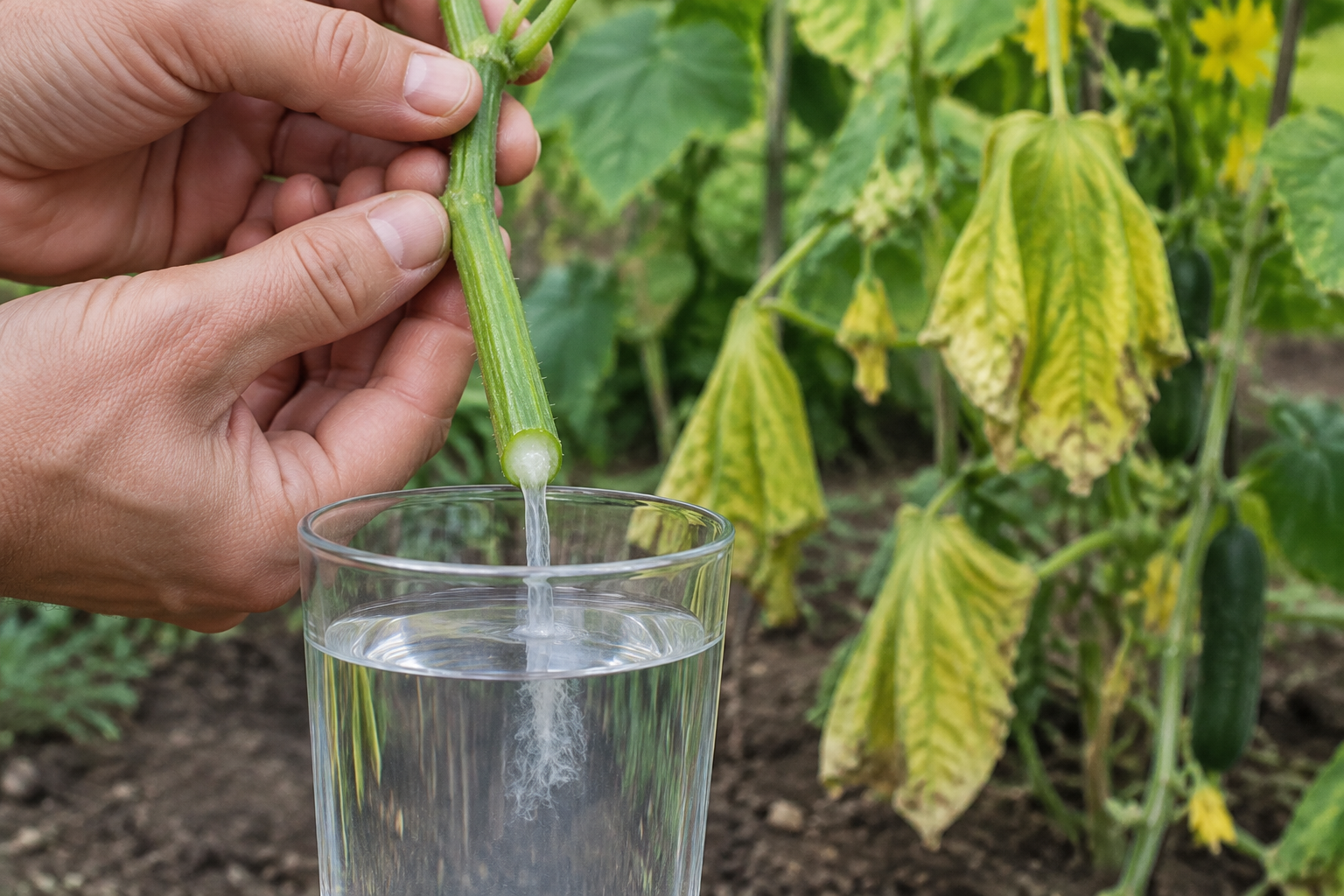
A vine that wilts, partly recovers at night, then collapses for good points to bacterial wilt, which striped and spotted cucumber beetles spread. The University of Wisconsin Extension gives a simple field test:
1. Cut a wilted stem near the base of the plant.
2. Press the two cut ends together, then pull them apart slowly.
3. Look for sticky, stringy ooze stretching between them.
Strands mean bacterial wilt. There is no cure, and Wisconsin advises removing infected plants. Pull it, bag it, and plan beetle control and earlier protection for next season.
Check the stem base as well. A soft, brown, sunken area at the soil line points to crown rot from Phytophthora or Fusarium, which Cornell lists among its wilt and crown decline causes. A vine that yellows and collapses, with honey-brown discoloration inside the lower stem, fits cucurbit yellow vine disease, spread by squash bugs. Neither can be reversed once the stem is affected.
Reading the leaves: yellow patterns and what they mean
Location matters most. One or two shaded bottom leaves turning yellow while the rest of the plant grows well is normal aging, so leave them alone.
Uniform pale yellowing that starts on the oldest leaves and creeps upward suggests a nitrogen shortage, or roots sitting in waterlogged soil. South Dakota State Extension describes nitrogen deficiency this way, since the plant pulls nitrogen out of old leaves to feed new growth. Some container growers say plants in porous fabric bags, watered often, run short and need weekly liquid feeding.
Yellow edges that turn brown and scorched, with leaves cupping downward, are the potassium pattern described by Texas A&M AgriLife. The browning starts at the margin and moves inward, unlike spots in the middle of the leaf.
Angular yellow patches that stop at the veins suggest downy mildew. Turn the leaf over: in humid weather the underside carries a purple-gray fuzz. Minnesota Extension says the patches turn brown and crisp, and a planting can lose most of its leaves in as few as 10 to 14 days, which cuts off the energy the fruit needs. Angular leaf spot, a bacterial disease, looks similar but leaves milky droplets and no fuzz.
What to do first, and what to skip
Start with the free fixes: pick every yellow cucumber, push a finger a few inches into the soil to check moisture, and hand-pollinate if bees can't reach the flowers. These three are the likeliest causes.
Skip fertilizer until those are ruled out. Feed only when the pattern matches a nutrient problem, meaning pale oldest leaves with dry soil, or scorched edges. A wilting plant with wet roots or disease gains nothing from it.
Downy mildew rewards speed. Cornell stresses acting early. Remove the worst leaves, space and trellis the vines so air moves through, and avoid wetting foliage late in the day. If you use a fungicide, apply it early and follow the label for cucumbers, because it protects healthy leaves better than it rescues damaged ones.
For confirmed bacterial wilt, pull the plant. The payoff comes next season: cucumber beetles arrive early, so protecting young plants then matters far more than treating wilted ones now.