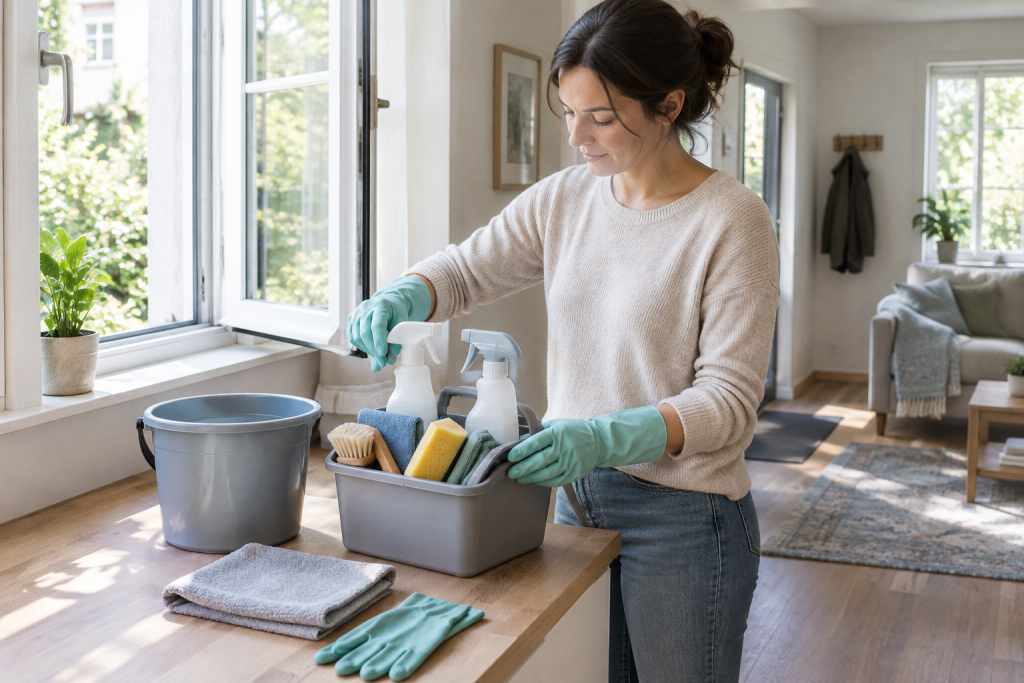
Set a cleaning order before you start
Dust can settle onto surfaces you’ve already cleaned, so work from high surfaces down and leave floors until last. Dust and wipe before vacuuming or mopping; a damp microfiber cloth can capture dust without flicking it into the air.
Make the first pass about ordinary dirt and dust. Cleaning removes soil; disinfecting is a separate step for situations that call for it. When you disinfect, clean the surface first and follow the product label, including its required wet contact time. A quick spray-and-wipe may not leave the surface wet long enough.
Give bedroom bedding a thorough wash
Bedding is a practical priority because it collects dust and skin particles. Strip washable sheets and blankets, then check care labels before choosing a cycle. For items that can tolerate it, washing at 130°F or hotter can kill dust mites and denature their allergens. Cooler washing can remove some particles but doesn’t have the same mite-killing effect.
The Asthma and Allergy Foundation of America includes bedding in its guidance on dust-mite allergen control. If a comforter or blanket can’t take a hot wash, follow its care instructions rather than risk damage.
Choose cleaners carefully—and keep bleach separate
Use products for their labeled purpose. A cleaner marketed as natural or botanical isn’t necessarily a disinfectant; if disinfection is needed, check that the label identifies it for that use and follow its directions.
Never mix bleach with other cleaners. In particular, keep it away from acidic products such as vinegar-based cleaners and from ammonia-containing products. These combinations can release dangerous gases. For routine spring-cleaning dirt and dust, cleaning is usually the job; adding disinfectant isn’t automatically necessary.
Check appliances where lint and residue collect
Clean the dryer’s lint screen regularly, then inspect the exhaust duct for lint buildup, damage, or a crushed section. Lint and restricted airflow can contribute to dryer fires. Rigid or semi-rigid metal ducting is preferable to flexible plastic or foil-style ducting, which can sag and trap lint. Follow the manufacturer’s cleaning instructions; if the duct is difficult to reach or appears damaged, arrange appropriate service instead of forcing a tool through it.
If laundry has a persistent sour odor, check the full gasket on a front-load washer, not just the visible outer lip. A homeowner with this problem found debris and residue in a concealed inner fold after cleaning the outer lip hadn’t resolved the odor. Follow the washer manufacturer’s cleaning instructions.
Skip routine air-duct cleaning unless there is a reason
Professional air-duct cleaning doesn’t need to be an annual spring chore. The EPA says to consider it when there is substantial visible mold inside hard-surface ducts or HVAC components, a vermin infestation, or ducts clogged with excessive dust or debris that is released into the home through supply registers. Otherwise, focus on surfaces and appliance maintenance you can address safely.